
Med Buddy
UX Case Study: Concept Mobile App
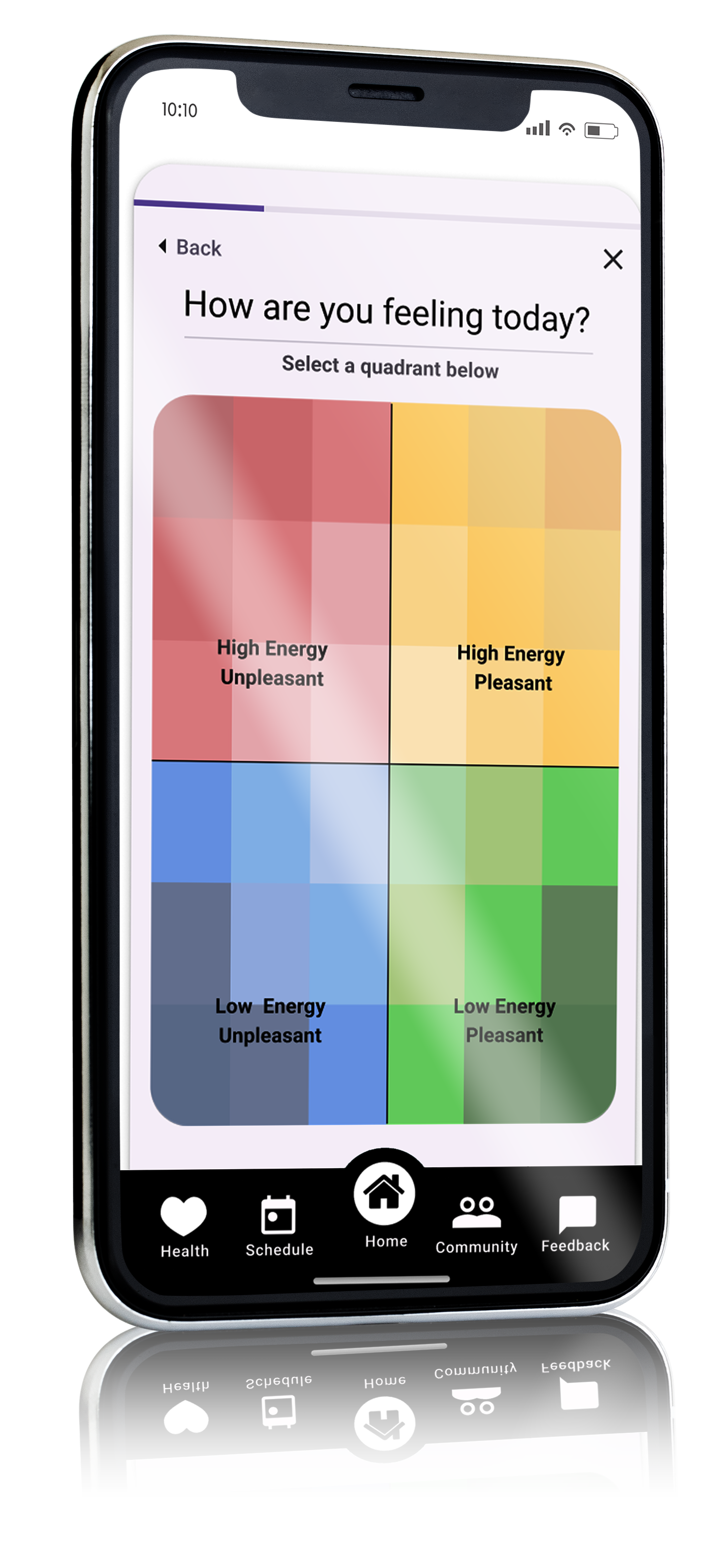
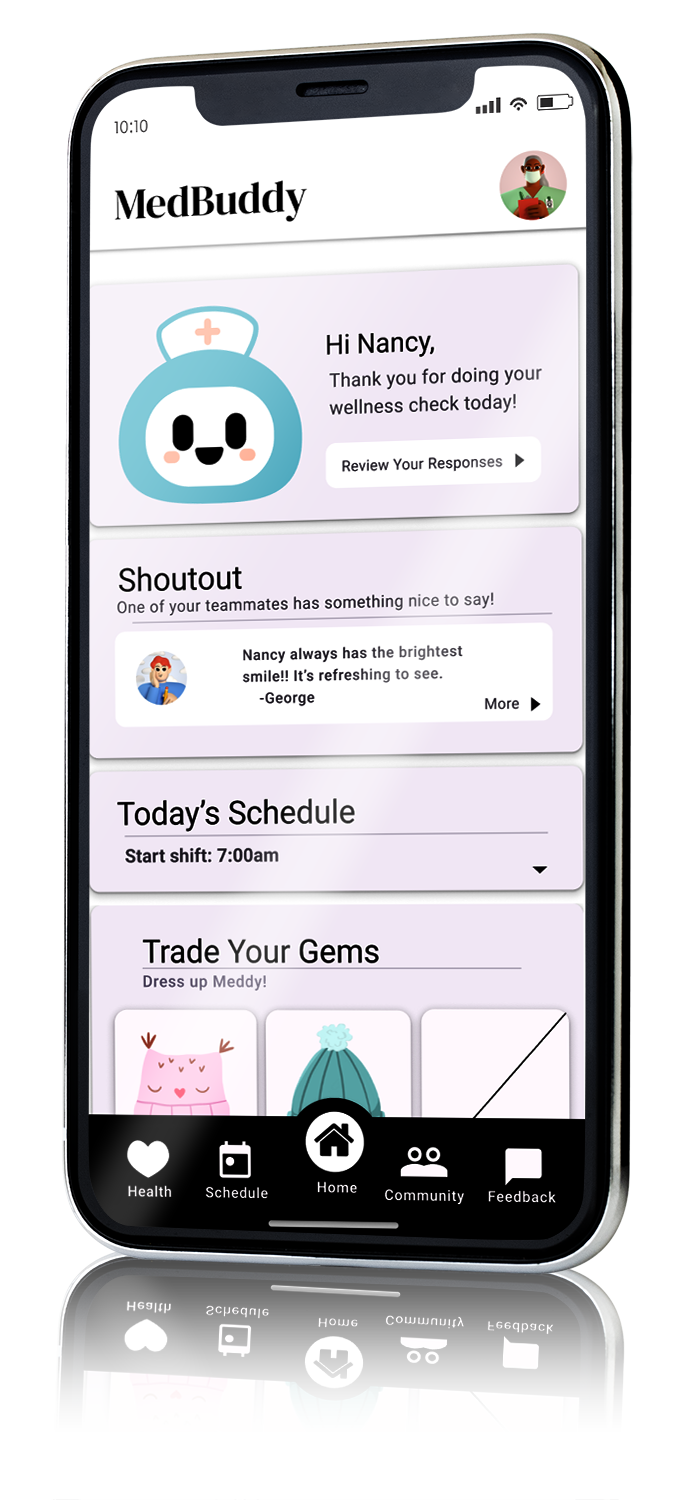
Med Buddy, a workplace mobile web app, is an anonymous, playful way for healthcare employees to track their moods, gain insights into their workplace, connect with coworkers, and provide anonymous feedback to employers without the fear of repercussions or stigma.
Project Overview
Details
Project:
Mobile Workplace Wellness App for Healthcare Workers
Teammates:
UI Design Lead: Uma Samudrala
Research Lead: Molly Rosenthal
My Role:
Project Lead, Product Designer
Organization:
Doctors Under the Radar is an organization committed to implementing actionable resources and support for physicians and all clinicians in the workspace. They provide high-impact solutions to healthcare leadership to mitigate doctors’ burnout and suicide attempts, while reducing workplace stigma against seeking treatment for mental health issues.
Project Scope:
Two Week Design Sprint
Discover a User and their Needs
Ideate a design concept
Design and Prototype the app
My Contributions
Leadership:
Scheduled Project Milestones
Daily Overview on project progress
Aided team in Prioritization
Presentation Introduction and Exit
Research:
Organized and Lead User Interviews
Organized and lead Usability Tests
Feature Inventory, Affinity Mapping, Competitive Analysis
UI Design:
Design Workshop and Sketches
Visual Design Research and "Mood Boards"
Iteration 2 Prototype Updates in Figma
DISCOVERY
“We reconstruct the engagement and communication between healthcare leaders and clinicians to reset the culture of medicine and use data to implement solutions.”
What’s the Problem?
Of healthcare workers report symptoms of mental illness.
Of healthcare workers report exhaustion and burnout.
Of healthcare workers thought they needed mental health services but did not seek mental health care for various reasons.
Female Nurses…
…are at higher risk of death by suicide. Suicide rates are 23% above the national average.
How Might We…
…provide Doctors Under the Radar with the data on workplace wellness that they need, while simultaneously providing healthcare workers with immediate support and healthcare leadership with high-impact solutions?
Competitor Analysis
What are Our Competitors Doing?
What’s Not Working
Subscriptions and High Prices leave out many customers or bar content altogether
Having Social Media features such as downvoting, or visibility on “Likes”
Quality impacted by instant communication
Adaptability across multiple devices
Only focused on individual improvements rather than overall wellness
Key Insights
What is Working
Validation and Customer Trust - Content and Advice is based on Scientific Research
Convenience - Use Anytime, Anywhere
Unique Community and ability to connect and interact
Customization and Personalization Features
Accessibility, Language
How this Impacted Our Design Decisions
Avoid Social Media Features due to negative outcomes, and focus on “Positive Feedback/Shoutouts/Kudos” instead
Consider a Business Model that is provides the app to workers for free through insurance
Provide visibility on how the Workplace Leadership is being guided by Doctors Under the Radar insights based on data gathered across the country, rather than focusing only on what the individual is changing about themselves.

“A lot of what we do is not normal... When you kind of step outside and look in and you're like, man, some of what we do is really intense... and like we try to minimize it or brush it off...”
-Anonymous Healthcare Worker
From User Interviews
Participants
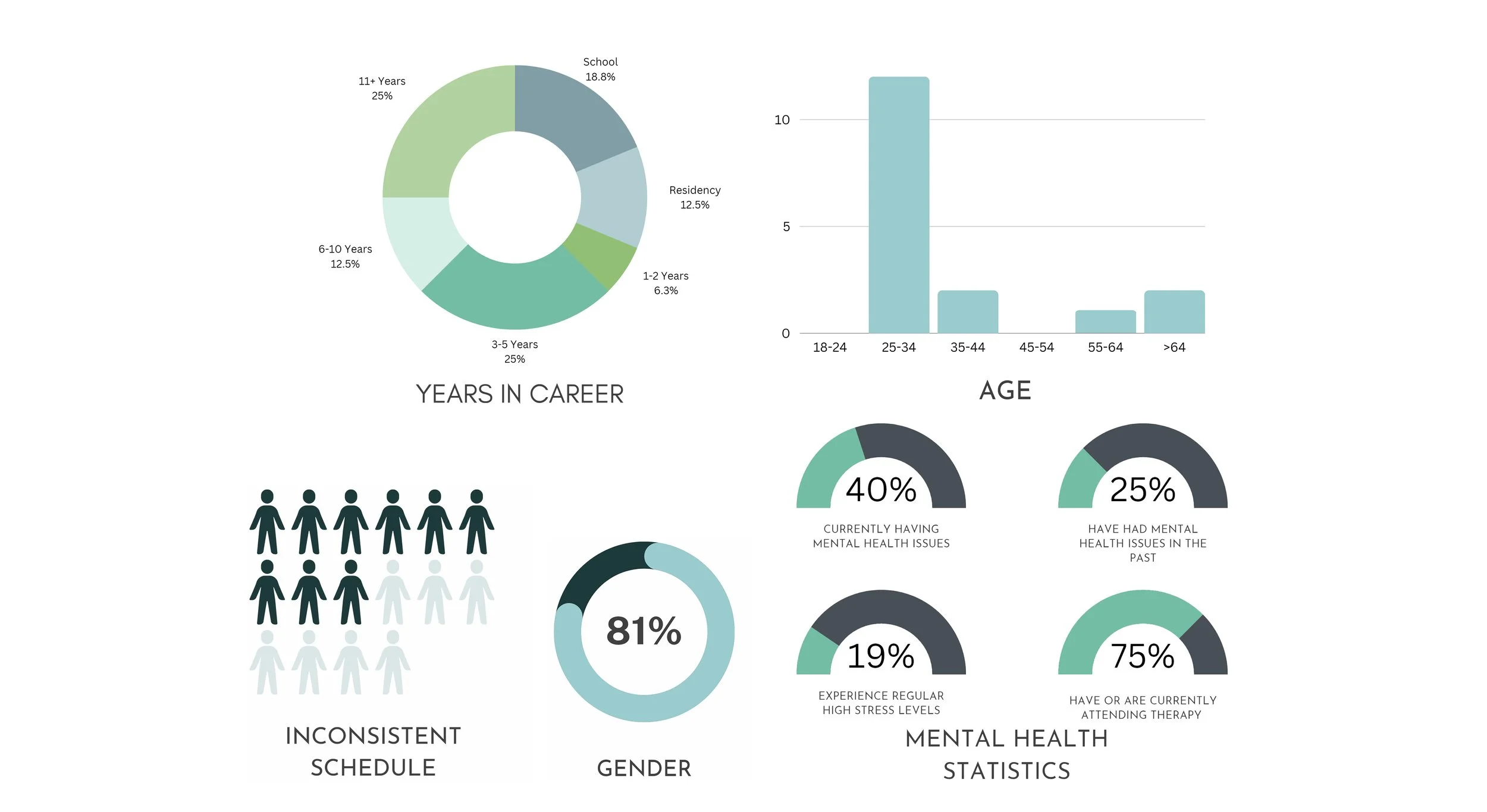
Statistics and Overview Based on Pre-Interview Survey
My team recruited for Interviews via personal networks and social media and online forums.
The turnout of participants was diverse. We had the opportunity to gain insights from a wide range of Healthcare Workers and learn about their unique perspectives and backgrounds.
Based on the results of this survey, we determined that our main participants…
User Interviews
Have/Had Mental Health issues
Have unreliable Work/Life Balance
Are Female-Identifying
Are ages 25-34
Participants
Statistics and Overview Based on Pre-Interview Survey
My team recruited for Interviews via personal networks and social media and online forums.
The turnout of participants was diverse. We had the opportunity to gain insights from a wide range of Healthcare Workers and learn about their unique perspectives and backgrounds.
Major topics covered during the interview process
What is your role in healthcare?
Tell me about the workplace
support offered to you.
Describe to me your main support systems.
Tell me about your stress/burnout management habits.
How would you describe your work/life balance?
Describe your workplace environment.
Inquiries
Affinity Map
Target User
Our Target User was identified quickly. Out of directors, physicians, surgeons and therapists, Nurse Practitioners overwhelmingly experienced the most difficult stretches of burnout due to job related stress.
Unpredictable schedules, long shifts and lack of workplace support are major contributors to work related stress and burnout. Participants who experienced healthier work/life balance were far better prepared to meet the uncommon and stressful challenges presented in healthcare.
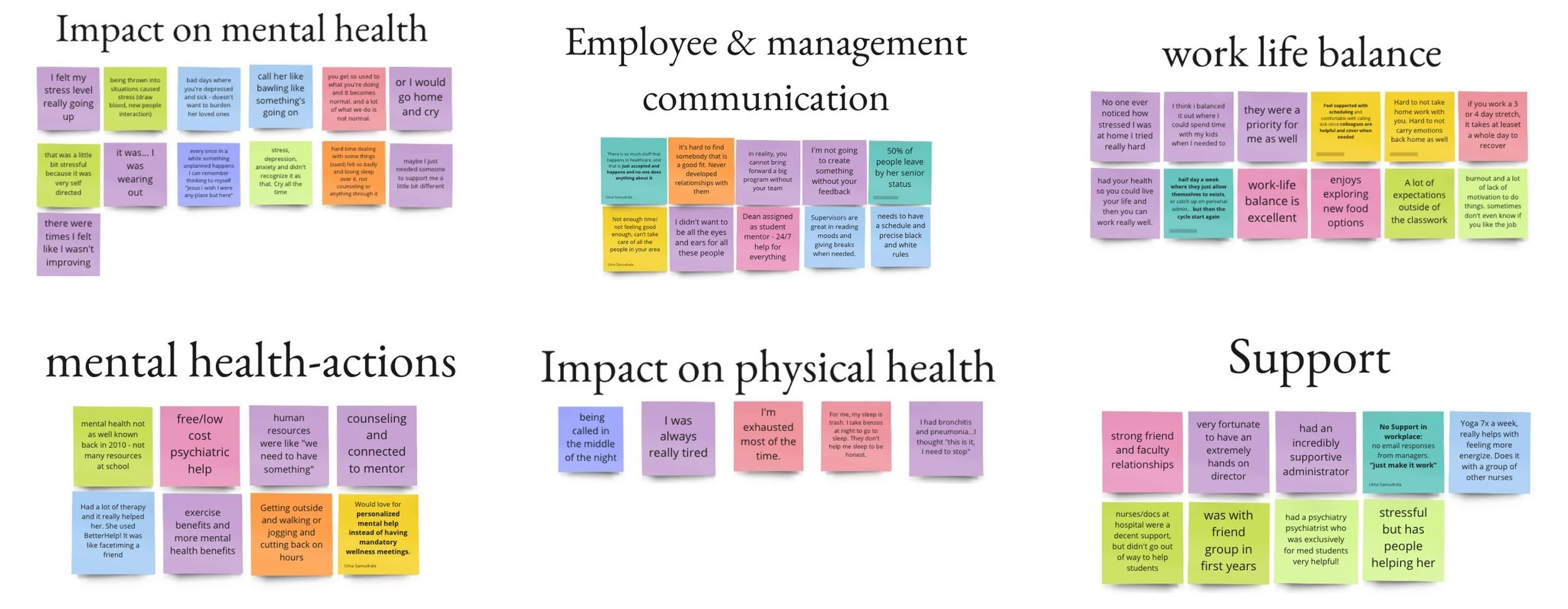
Define
We used our Research to form a Persona, which helped inform our decisions.
User Persona
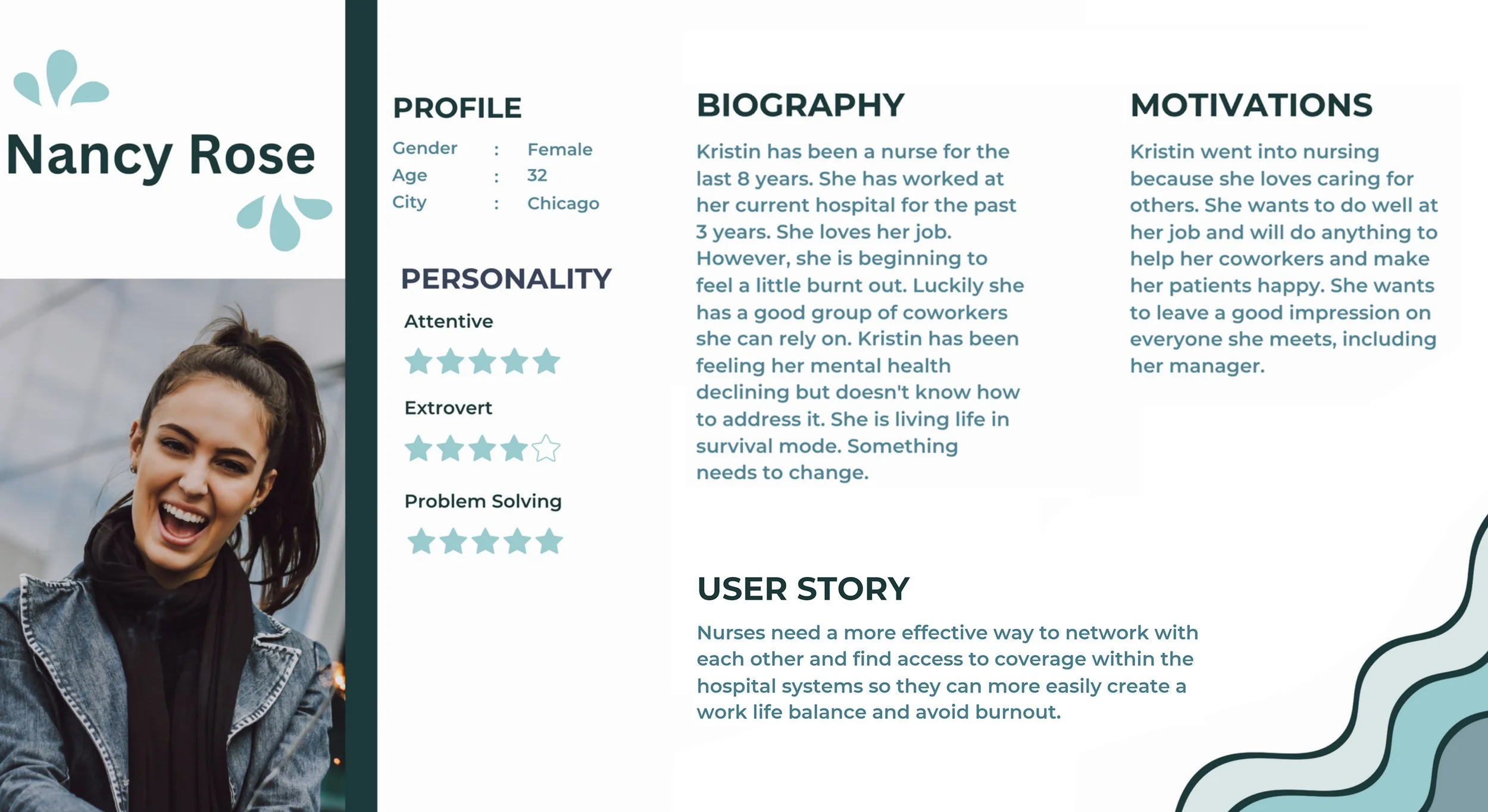
For this Sprint we focused on the Healthcare Worker as our main user. However, my team recognized the need for two target Users - Healthcare Leadership Consulting is a major aspect of Doctors Under the Radar's services, as they offer data-driven solutions for Healthcare Leadership teams, which help organizations make high-impact decisions to support their employees and reduce burnout and risk of mental illness. That problem statement is as follows:
Healthcare Leadership needs data-supported and professionally curated workplace improvement solutions to better support employee work-life balance because the demanding, high pressure environment drive healthcare workers to mental illness, or to leave the field entirely.
Problem
Healthcare Workers need a safe and anonymous way to voice their workplace concerns and track the work environment's impact on their mental well-being because workplace repercussions and stigma often prevent employees from speaking up.
Solution
Med Buddy a Doctors Under the Radar mobile app, is an anonymous, fun way for healthcare employees to track their moods, gain insights into their workplace, connect with coworkers, and provide anonymous feedback to employers without the fear of repercussions or stigma.
Design
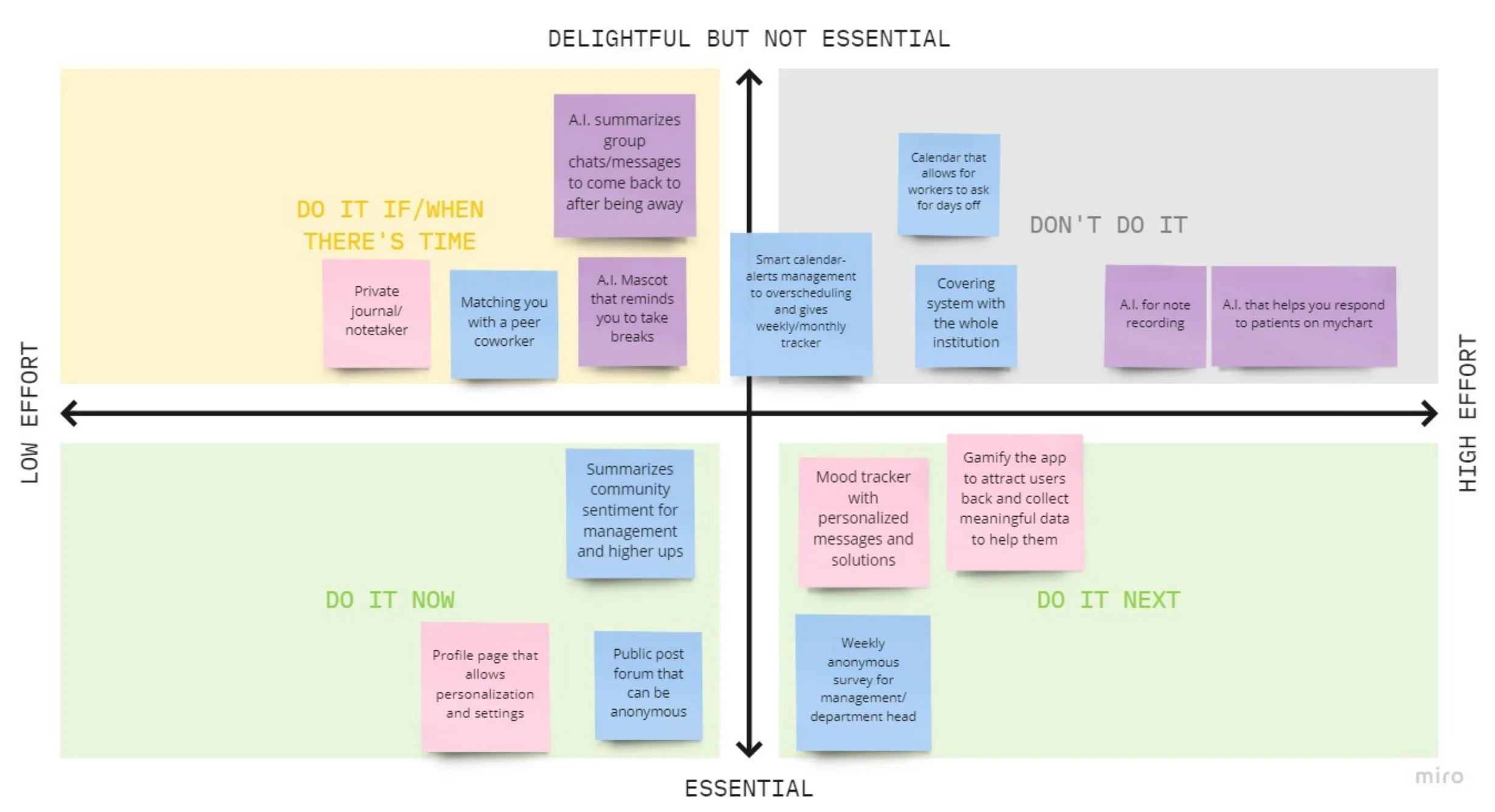
Prioritization Chart
Prioritizing the Important Features
My team was bursting with creativity and possibilities for our potential app. In order to keep us aligned, I sketched out a prioritization chart in Figma and invited everyone to collaborate on sorting our ideas from “Essential, Low Effort” to “Non-Essential, High Effort”. We took into consideration our short deadline. By the end of this activity, my team was aligned for our next steps.
User Flows, Sketches
and Wireframes
Iteration 1
After Design Workshop
Once we completed our design workshop and pitched all of our ideas with sketches, I took the initiative to clean them up for clarity on the next phase - Wireframes!
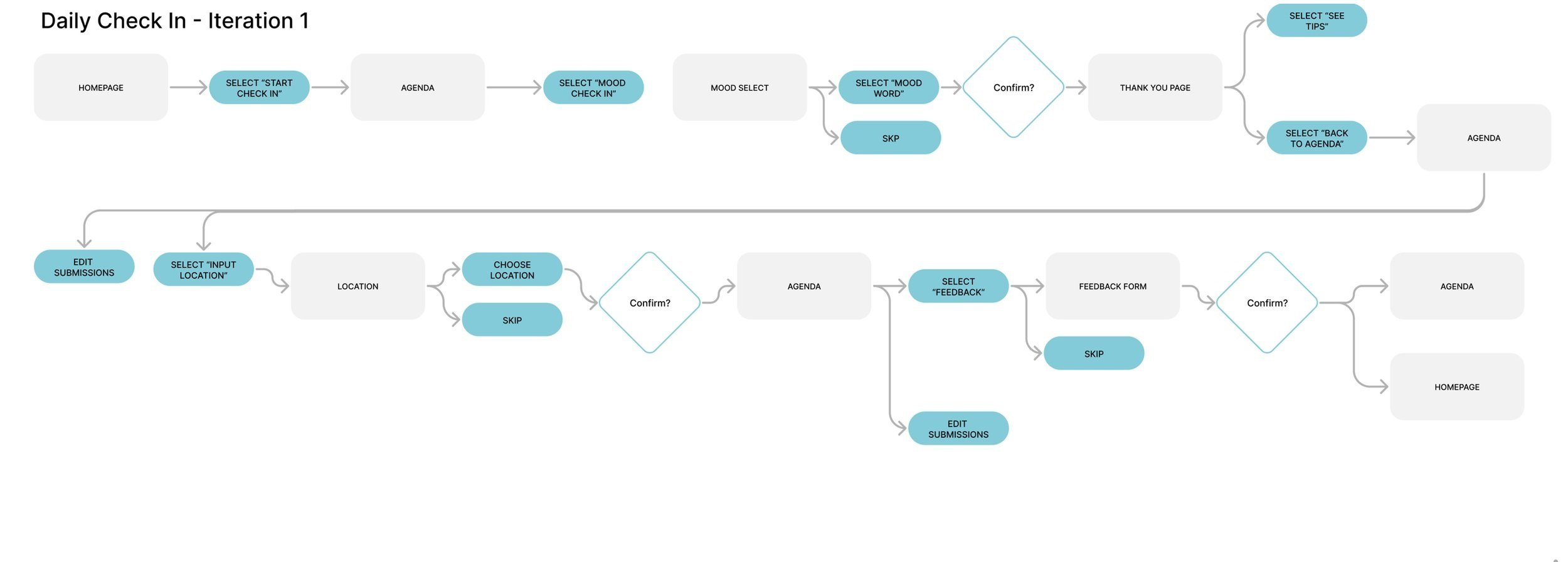
User Flow of Daily Check In - Version 1
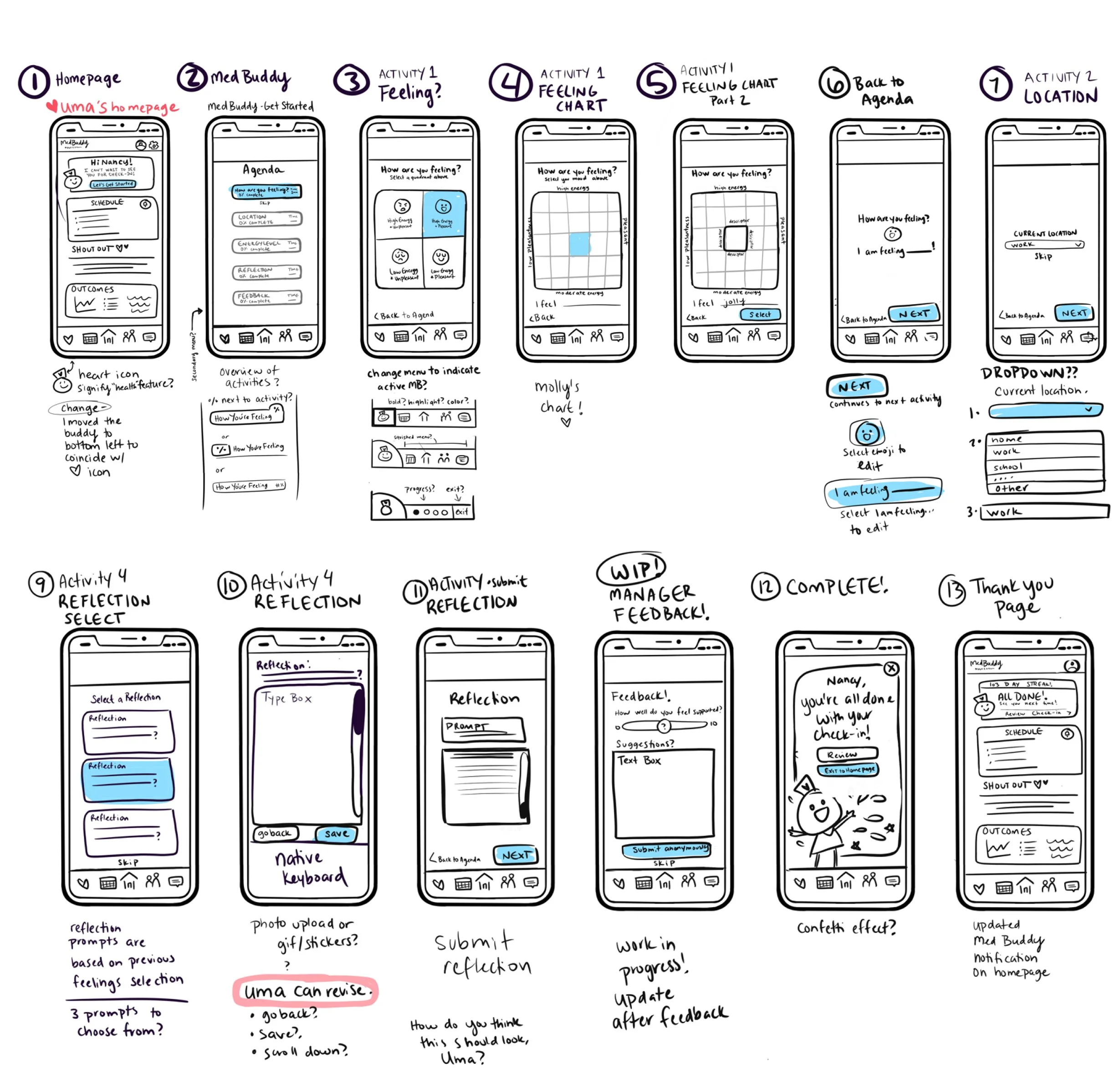
My Sketches of Daily Check In
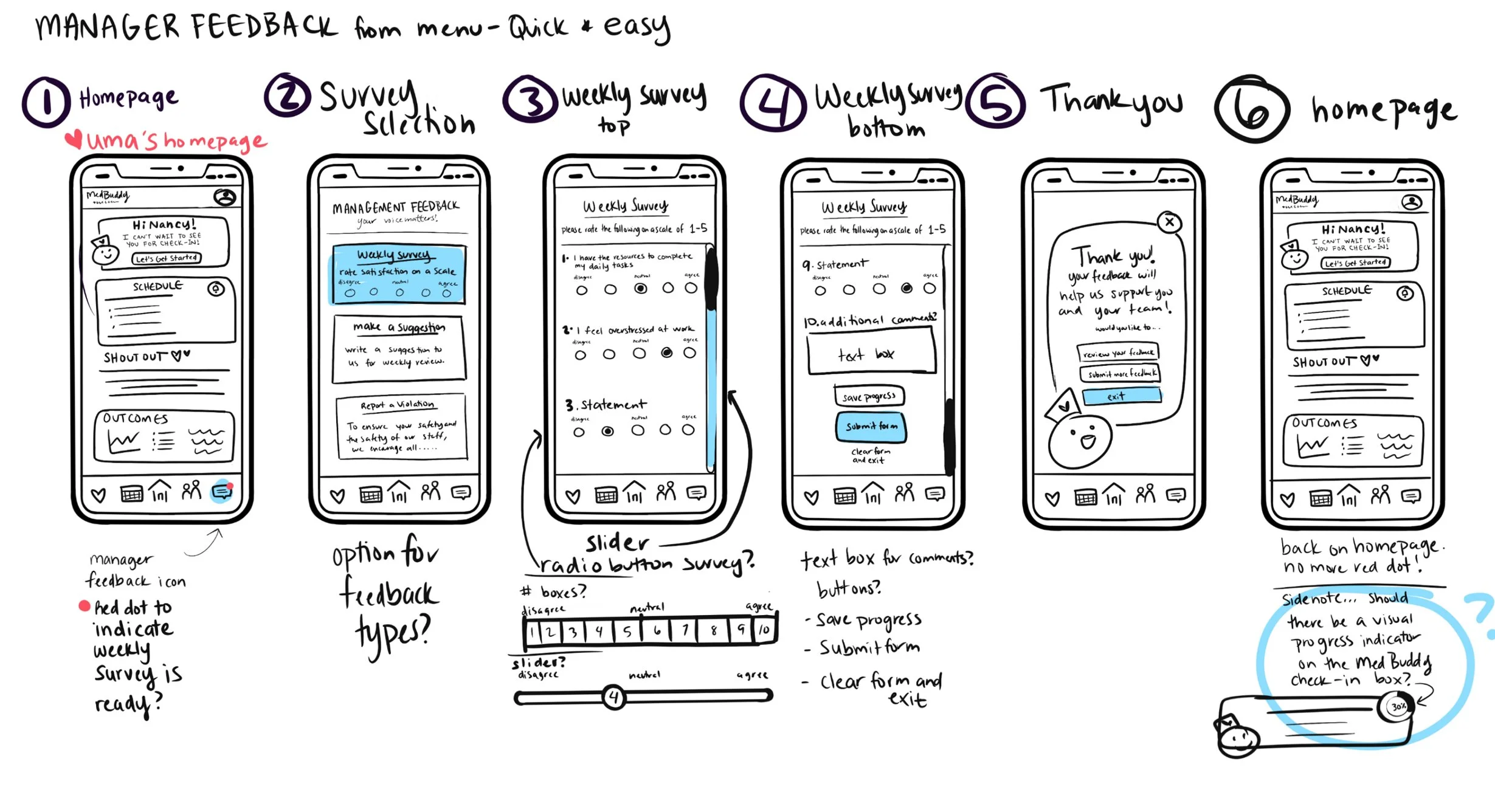
My Sketches of "Manager Feedback"
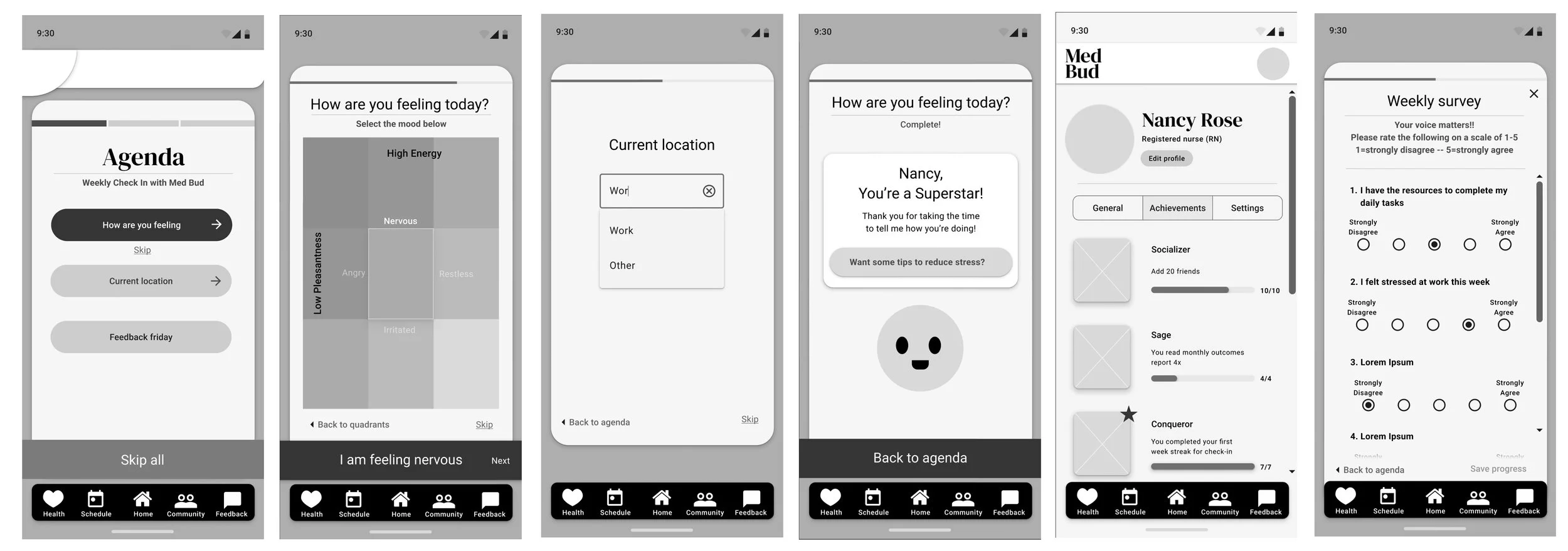
Low Fi Wireframes of Main Flow Pages
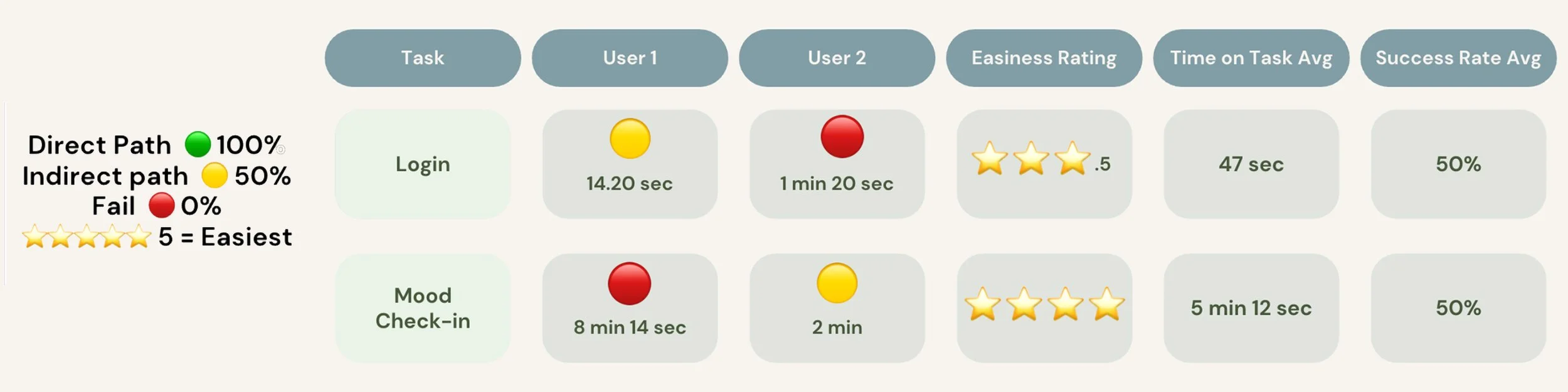
Usability Test Insights
Iteration 1 of 2
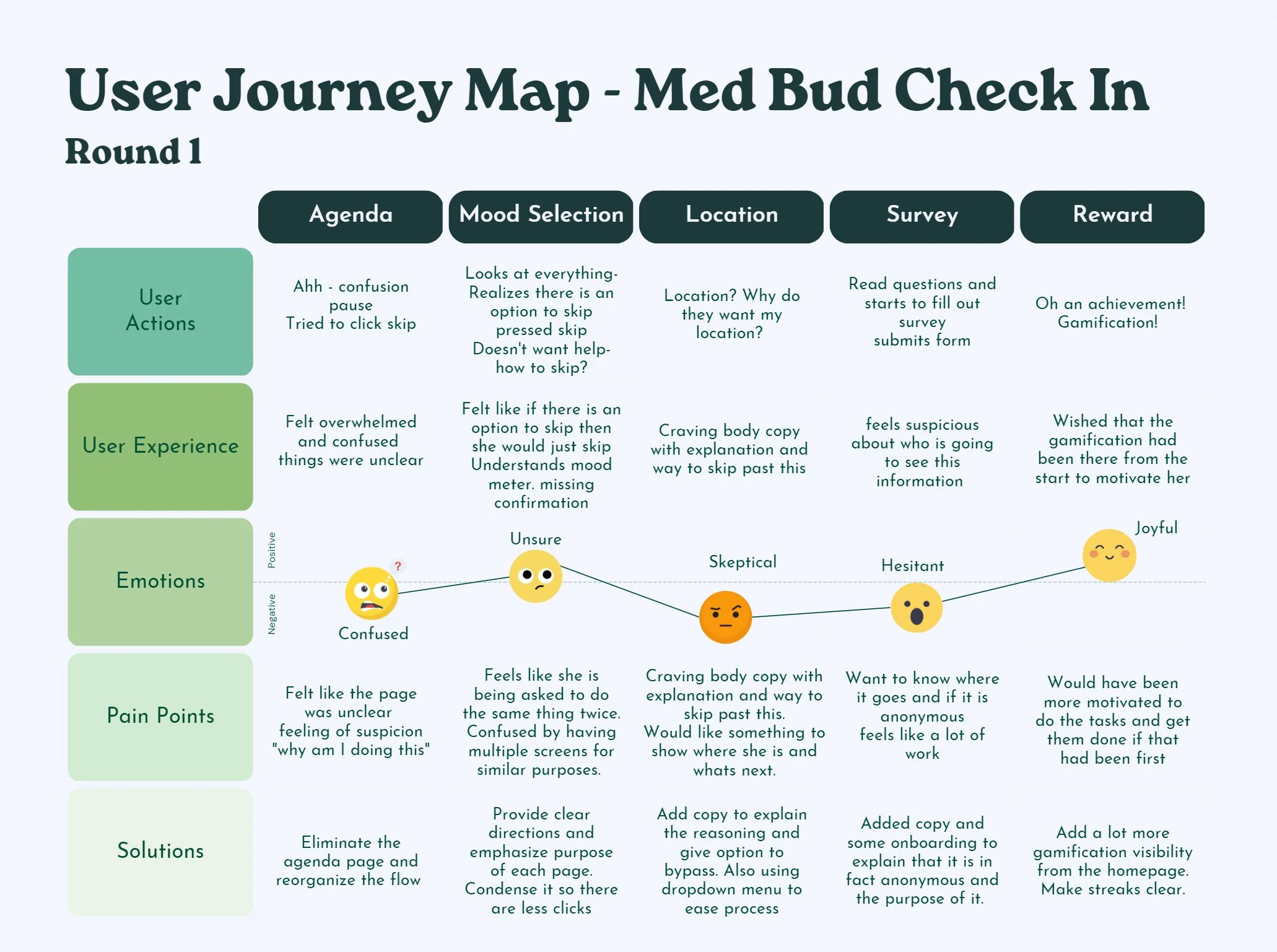
Key Insights
What’s Not Working
Unclear Purpose of App
Cognitive Overload - confusing check in
Purpose of tasks unclear
Lack of trust - employee monitoring
What is Working
Interesting concept - sounds helpful!
Rewards was a huge hit!
“Shoutout/Kudos” is delightful
Actionable Fixes
Next Steps
Clarify and simplify the Check-in
Indicate the next steps
Explain purpose of tasks
Gamification!
Rewards
MedBuddy Mascot
Corrections Made Based on Usability Test Insights
Shortened the Check-In by
Removing the Agenda Select page interrupting the flow
Removing the “tips to avoid stress” thank you page after the Mood Check In
Removing the “Manager Feedback” selection
Adding in reassurance of how information is being used
Clarifying what the “Next Steps” in Check-In are
Gamification! For fun, charm and smiles.
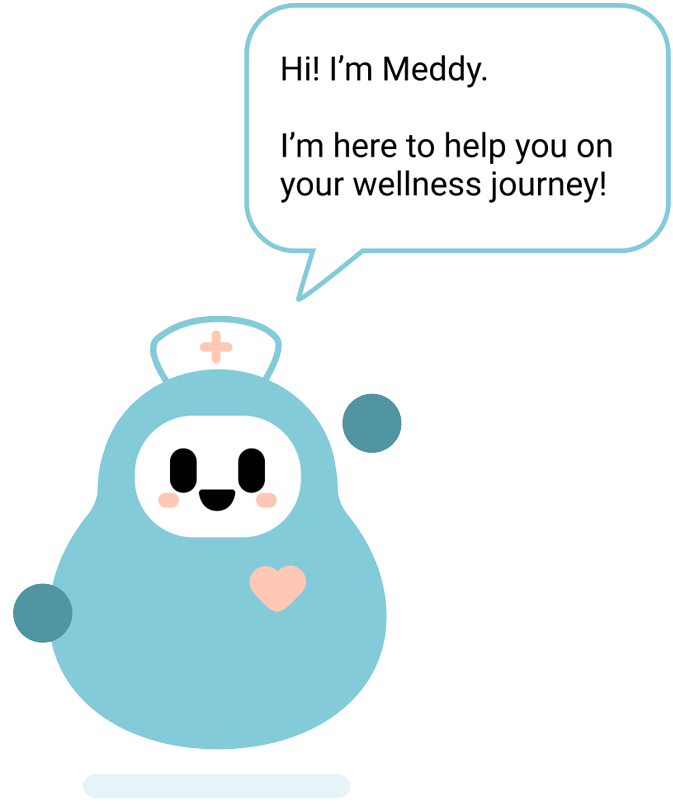
I designed “Meddy” the mascot, who encourages and reassures the user
Rewards in the form of Gems and badges
“Meddy Dress Up” to exchange gems for accessories
User Flow and Wireframes
Iteration 2
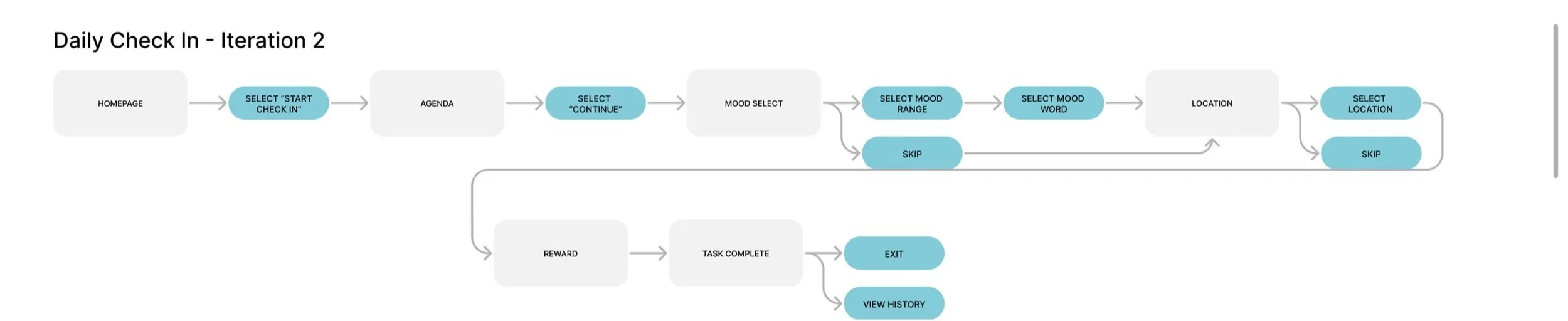
User Flow for Check In - Version 2
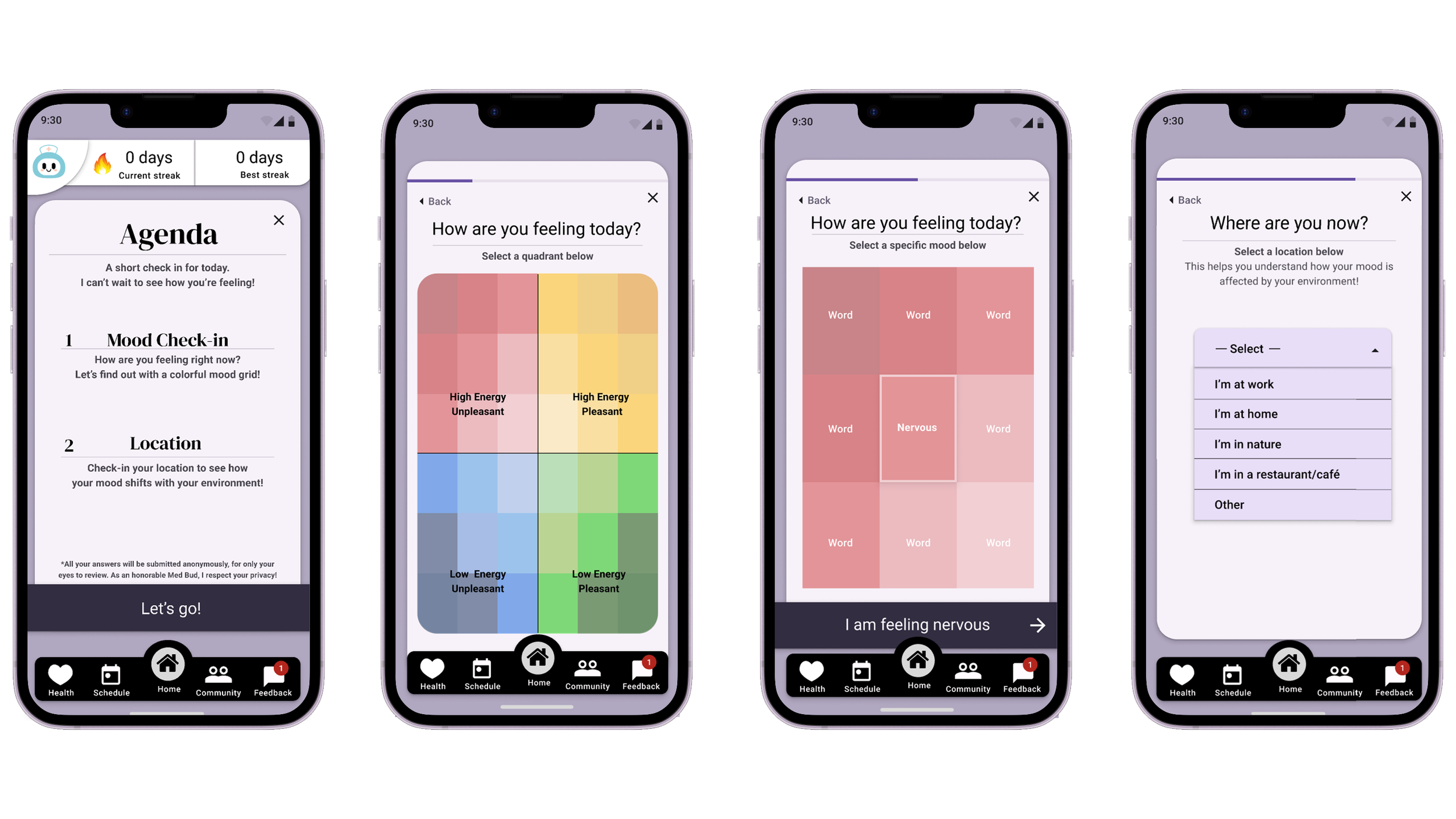
Agenda and Tasks Wireframes
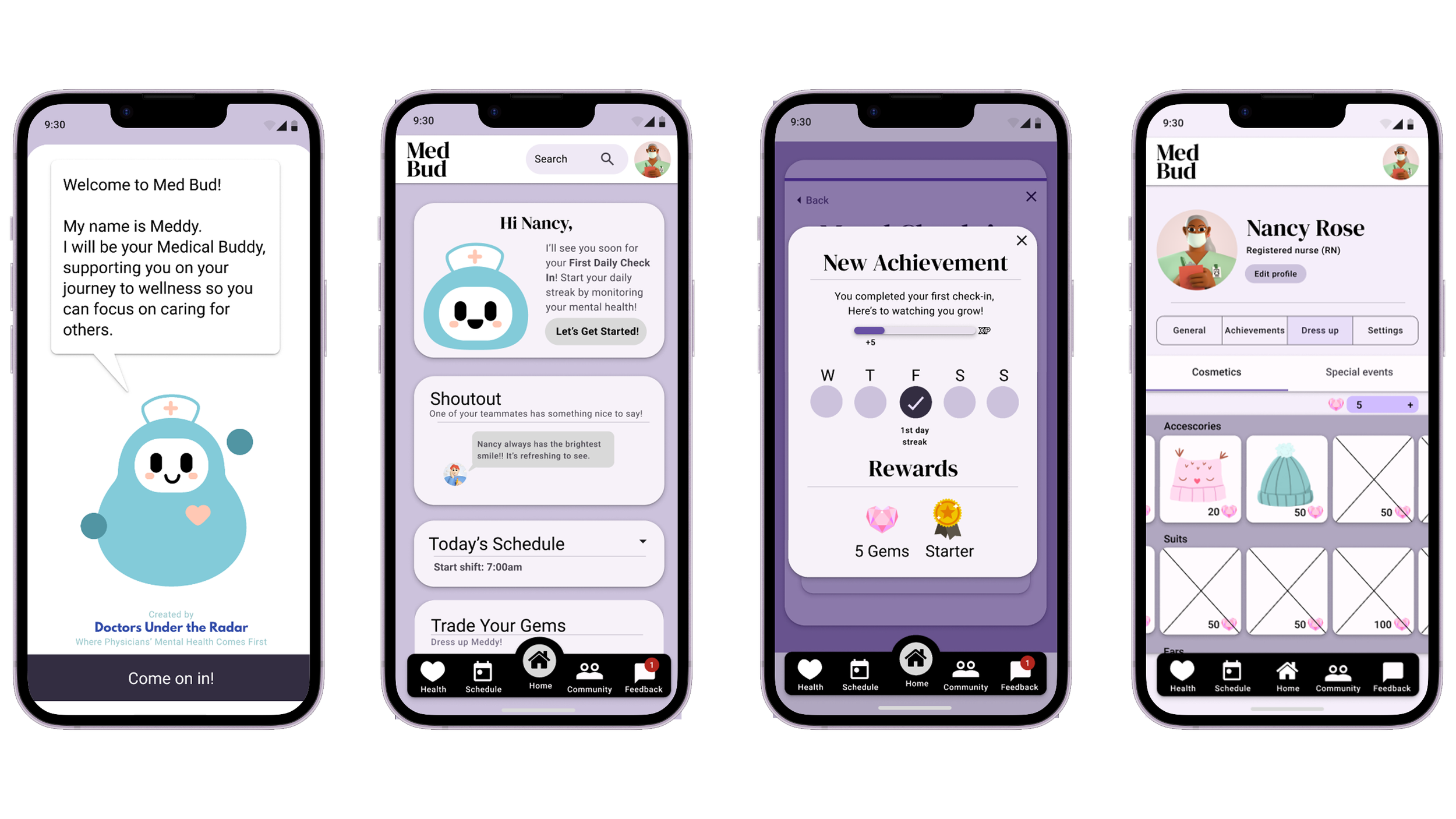
Homepage and rewards Wireframes
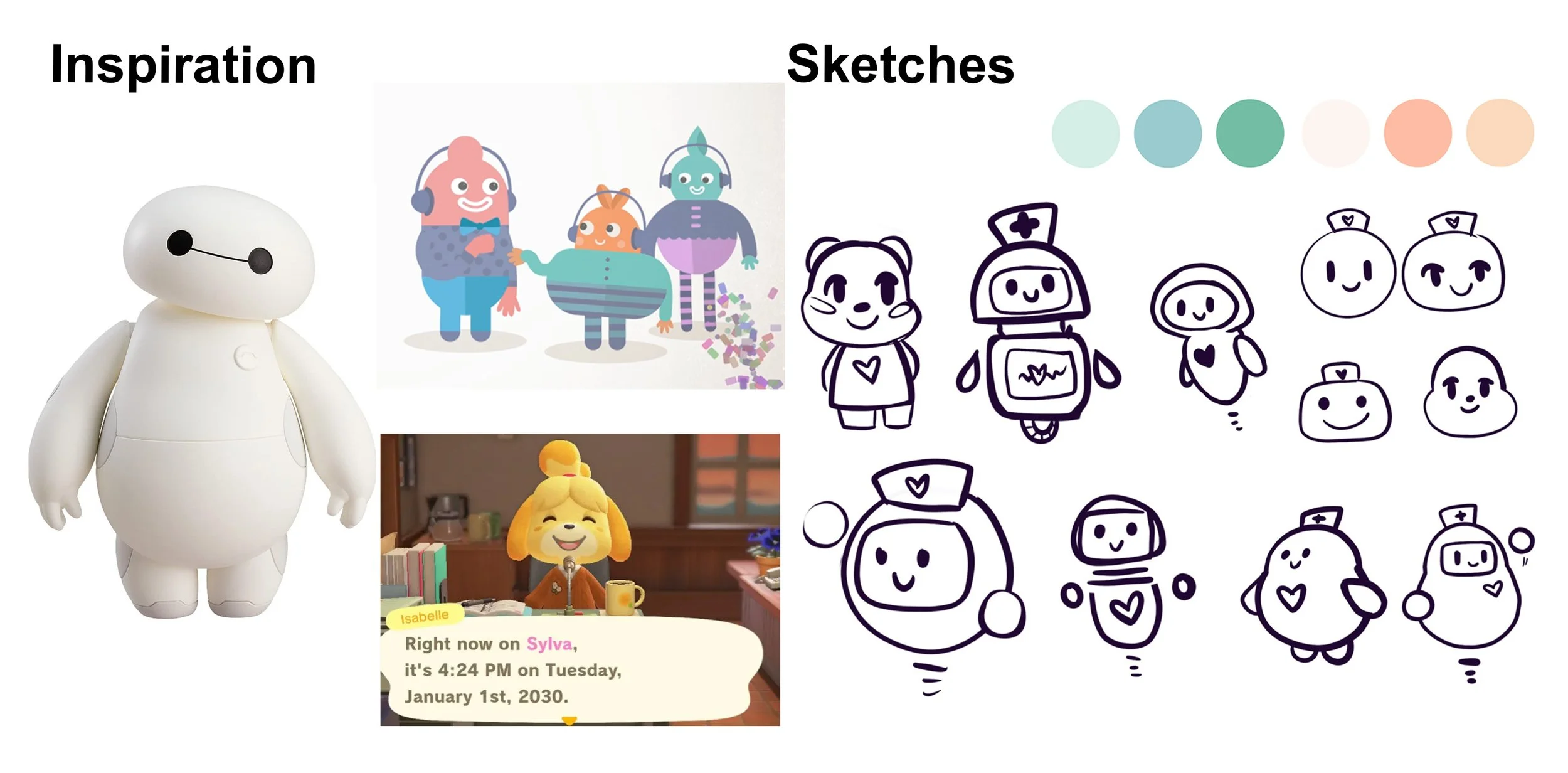
Med Buddy Concept Sketches and Reference
Usability Test Insights
Iteration 2 of 2
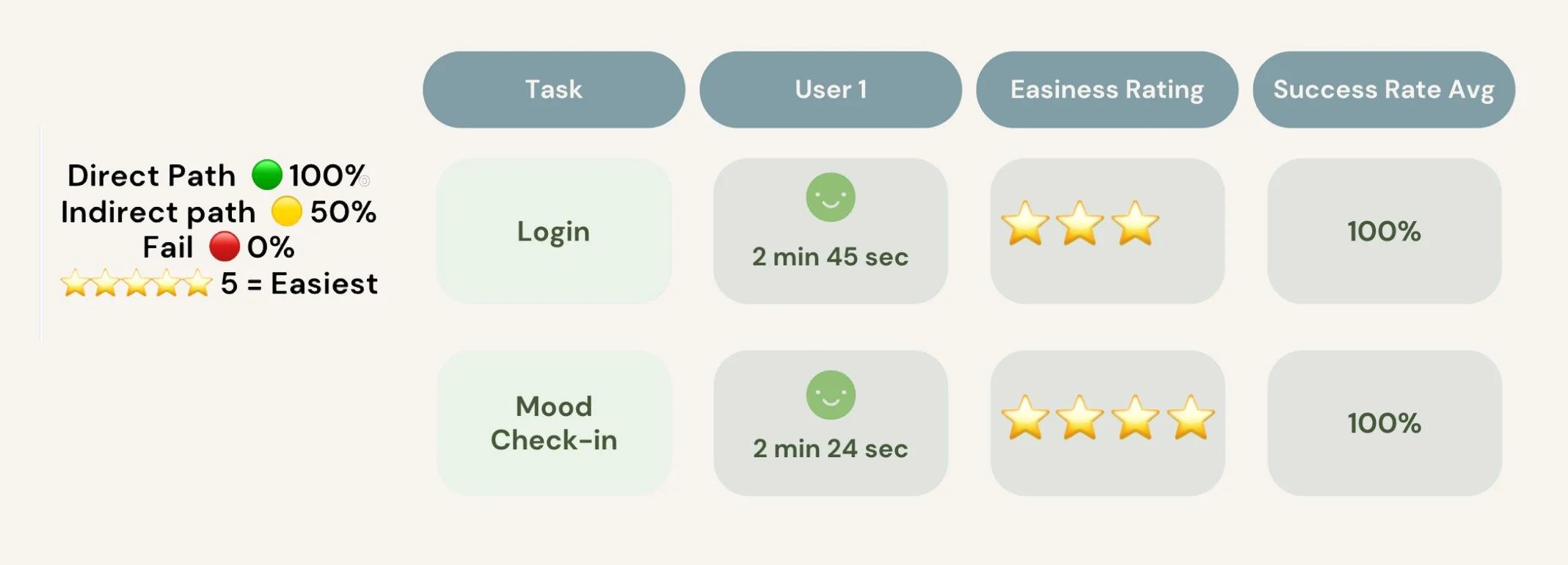
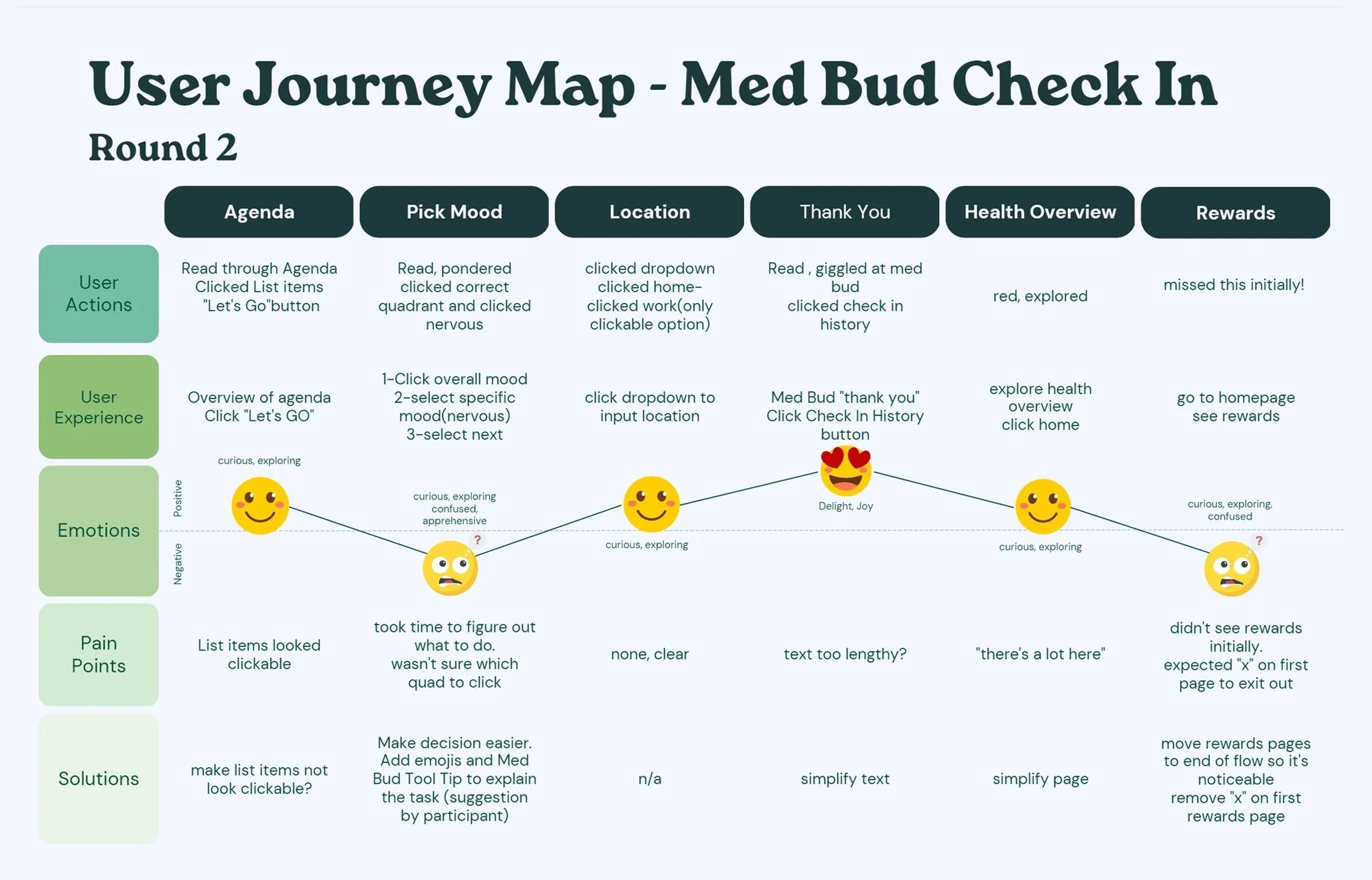
What’s Not Working
“Mood Input” is still confusing to users.
“Rewards page” was missed entirely due to it popping up on the homepage rather than the end of the Check In Flow
“Location Input” is straitforward but boring
Key Insights
What is Working
Meddy was a huge hit! More of Meddy.
Rewards is a huge hit!
“Shoutout/Kudos” is delightful to all users
Actionable Fixes
Next Steps
Condense rewards to one page
Move rewards page to the end of the Check-in flow
Med Buddy Tool Tip/ Tutorial for Check-In flow
or, reconcept the Mood Input visual design
Research rewards systems and test the dress-up Meddy idea
Expand on “Shoutout/Kudos” idea, as this is delightful for all users
Usability Test Insights
Iteration 2 of 2